There might be a myriad of reasons why you might need a firearm, such as self-defense, hunting, or sports.
All logical
Except for all that jargon
Getting a firearm for the first time is already a long journey; do you really need to add learning a new language to the mix?
No, with the right resources by your side
This guide brings you a clear breakdown of the terms you’ll hear most often and what they really mean.
Let’s start with the basics.
1. Firearm Anatomy

Nothing too complicated here
If you are a complete beginner to firearms, the first step is to understand the main parts of a firearm. These terms pop up everywhere, in training, manuals, videos, and conversations, so becoming familiar with them will make things easier right away.
Barrel
The barrel is the long metal tube that the bullet travels through when you fire. Pretty important as its length and internal design influence accuracy, recoil, and velocity.
Long guns like rifles and shotguns have long barrels; handguns usually have short ones.
Muzzle
Think of this as the end of the barrel where the bullet exits.
Anytime someone mentions “muzzle awareness” or “pointing the muzzle in a safe direction,” this is the part they mean.
Chamber
The chamber sits at the back of the barrel. It’s where the cartridge, a round of ammunition, is placed before the gun fires.
Action
The action is the heart of any firearm.
It describes how the gun loads, fires, and ejects a round. Phrases like pump action or semi-auto action focus on the mechanism that keeps things moving inside the firearm.
Trigger, Trigger Guard
The trigger is, obviously, what you press to fire.
The trigger guard, on the other hand, is the protective loop around it that helps prevent accidental discharge. You’ll usually hear things like “keep your finger off the trigger.” Remember: that’s rule number one in firearm safety.
Safety
Many firearms include a manual safety, a switch or button that blocks the gun from firing.
But even if a firearm has a safety, nothing replaces good handling habits.
2. Ammunition

Ammunition vocabulary can be confusing at first, but it is not impossible to understand.
Cartridge vs. Bullet vs. Round
This one gets beginners all the time.
- Bullet: The little thing that exits the barrel.
- Cartridge: The full package, bullet, casing, primer, and powder.
- Round: Just another word for a single cartridge.
Caliber
Caliber refers to the diameter of the bullet.
Common examples: 9mm, .45 ACP, .223 Rem.
And here’s a fact that might surprise some: A bigger number does not always mean more power; the design matters too.
Grain (gr)
Grain is a measurement of bullet weight.
More grains = heavier bullet. Naturally, this impacts recoil, accuracy, and velocity; a heavy bullet won’t reach the same speed as one lighter.
Rimfire vs. Centerfire
This explains how cartridges ignite.
- Rimfire: Primer is in the rim. (Example: .22 LR)
- Centerfire: Primer sits at the center of the casing. Most modern ammo is centerfire.
Centerfire is generally more reliable and reusable.
FMJ, JHP, Soft Point
These are bullet types:
- FMJ: Also known as Full Metal Jacket, it has a reputation for being the perfect companion to the practice range. Consistent, affordable, and overall reliable.
- JHP: Jacketed Hollow Point. Expands on the impact, so it’s often used for defensive contexts.
- Soft Point: Kind of a middle ground between the benefits of the FMJ and JHP.
Magazine vs. Clip
Another big misconception.
- Magazine: Holds and feeds ammunition into the firearm.
- Clip: A simple device that helps load a magazine.
3. Shooting & Handling Terms You Will Definitely Hear
Recoil
It always happens: you grab a gun for the first time, shoot, and it feels like something has pushed your whole body down.
No, it’s not a ghost.
It’s normal recoil. Different guns and ammo produce different recoil levels.
Sight Picture
This is what you see when your front and rear sights are aligned on the target, which leads us to…
Sight Alignment
The relationship between the front and rear sights. To make sure you have the right alignment, you need to achieve the same height and space between the front and rear sights. It might look a bit complex, but this is what helps you shoot accurately.
Zeroing
Adjusting your sights or optic so that the point of aim matches the point of impact. If you’ve ever wondered why someone spends time adjusting their scope, this is why.
Dry Fire vs. Live Fire
This is the kind of jargon you’ll hear at the practice range
- Dry fire: Practicing trigger control without ammo.
- Live fire: Shooting with ammunition.
Stance, Grip, Follow-Through
These are the fundamentals of shooting:
- Stance: How you position your body.
- Grip: How you hold the firearm.
- Follow-through: How you maintain control after the shot.
Malfunctions
Even well-maintained guns have occasional hiccups.
- Misfire: The trigger is pulled as normal, but the round doesn’t go off. The reasons vary, but most commonly, you’ll find that the culprit is a defective cartridge or something mechanical.
- Stovepipe: A casing gets stuck, sticking upward like a little chimney. Poor maintenance and a light grip are among the most common causes.
- Double feed: Two rounds try to enter the chamber at once.
4. Safety and Legal Vocabulary
We’re keeping things general here, nothing difficult, but definitely helpful for those of you who have never owned a gun before.
Safe Direction
The direction the muzzle is going, you don’t want to harm anyone or yourself accidentally, so always remember, your finger off the trigger until it’s the moment to shoot in a safe environment.
Trigger Discipline
Again, and yes, it’s that important…
Keeping your finger off the trigger until you’re ready to fire. This is one of the most fundamental habits you’ll ever build.
Background Check
A required process for firearm purchases in many places. The details vary by country or state, but the general idea is universal. You will deal with paperwork.
FFL (Federal Firearms License)
In the U.S., this refers to licensed firearm dealers and transfer points.
Transfer
Moving a firearm from one legal owner to another is usually done through an FFL.
Serial Number
A unique identifier on a firearm. Never removed, altered, or ignored.
5. Gear and Accessory Terms
You’ve probably heard people throwing around gear terms casually, but here’s what they actually mean.
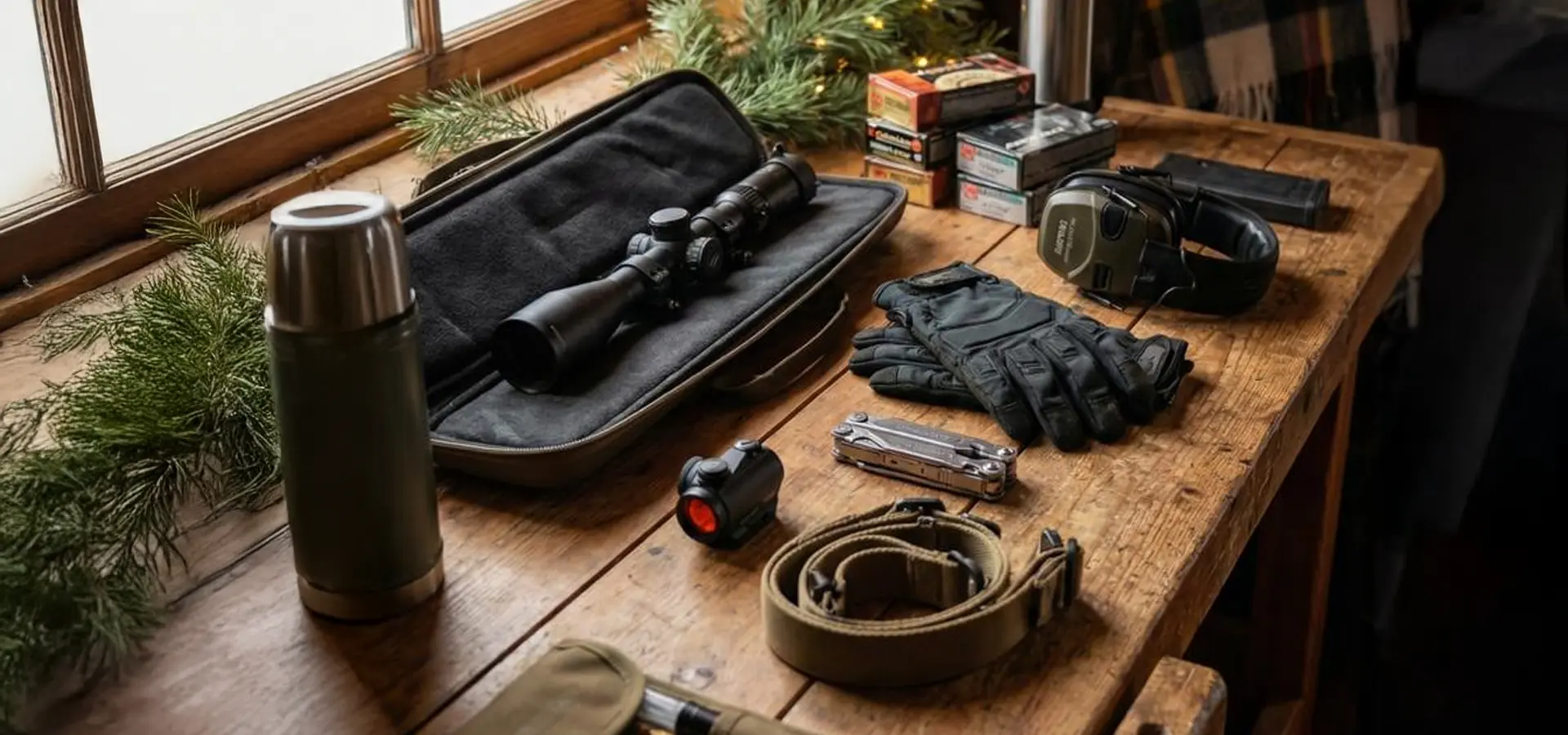
Optics
Any sighting device that uses glass:
- Red dots: For quick target acquisition
- Scopes: Magnified optics for distance shooting
Iron Sights
The basic front and rear sight system is built into many firearms.
Sling
A strap that helps you carry or stabilize a long gun.
Holster
A device for carrying a handgun securely on your body. The main goal is safety and retention.
Suppressor
A device that reduces noise and muzzle flash. Legal status depends on your jurisdiction, so always check local laws.
Key Takeaways
• Understanding firearm terminology builds confidence and improves safety, especially for beginners learning the basics.
• Knowing the difference between terms like cartridge vs. bullet, magazine vs. clip, or AR’s true meaning helps avoid common misconceptions.
• Familiarity with basic anatomy, barrel, action, chamber, and safety makes handling and discussions much clearer.
• Learning shooting vocabulary (recoil, zeroing, stance, sight alignment) supports better training and accuracy.
• Knowing general safety and legal terms empowers responsible ownership and clearer communication with professionals.
• Accessories like optics, holsters, and slings have simple roles that become easier to understand once the terminology is clear.