How can you tell the difference between pistol and revolver?
At first glance, the two might seem almost identical , both are compact, short-barreled firearms designed to be fired with one hand.
Yet their mechanics, operation, and ergonomics represent two very different design philosophies. Understanding those differences is key to choosing the firearm that best fits your skill level, purpose, and shooting style.
Origins and Evolution of Each Firearm Type
The revolver dates back to the 19th century with the legendary Colt Paterson of 1836, the first repeating handgun capable of firing several rounds without reloading after every shot. Its simplicity and reliability made it the standard sidearm for decades.
The semi-automatic pistol appeared later that century, based on a new principle: using the gases from a fired round to automatically reload the next cartridge. This innovation — seen in designs like the Luger P08 and Colt M1911 — forever changed the dynamics of handguns.
Fundamental Mechanical Differences
The core difference lies in the feeding and firing system.
- In a revolver, cartridges are stored in a rotating cylinder that aligns each chamber with the barrel before firing.
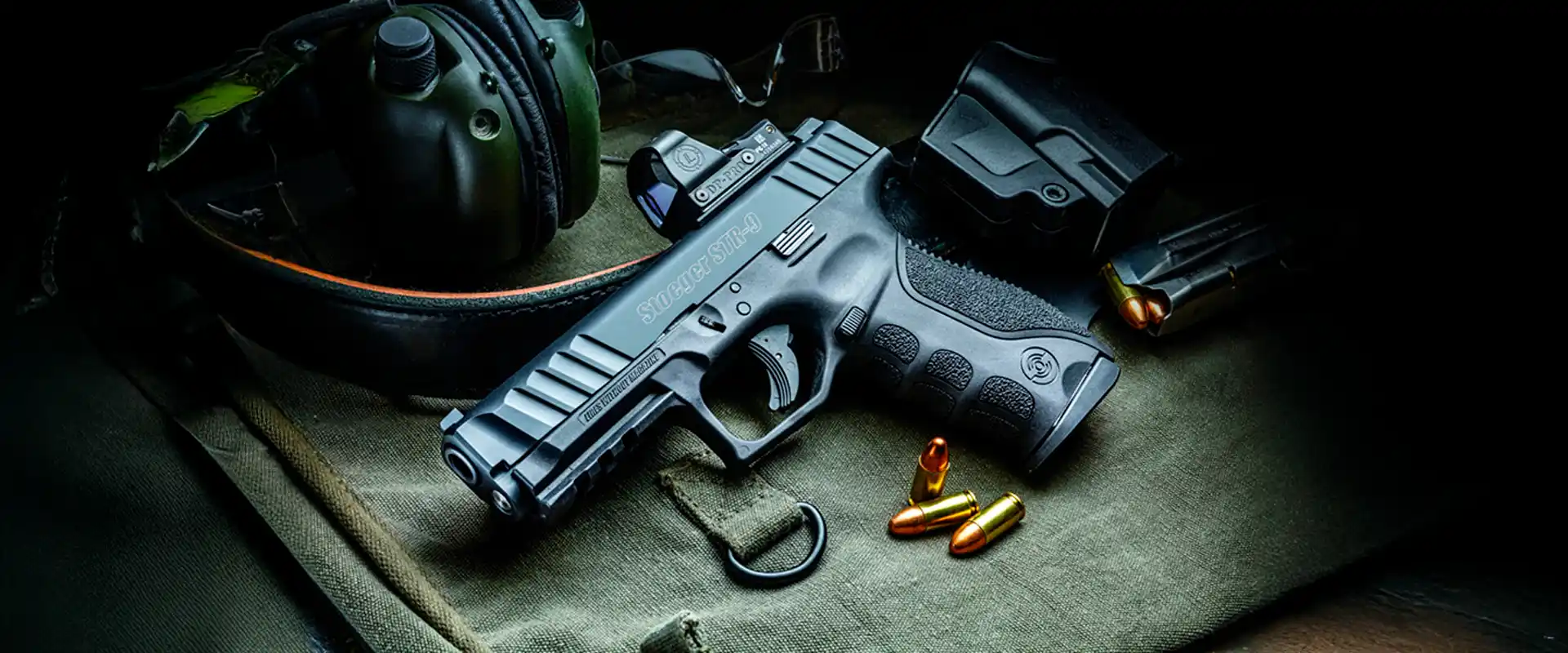
- In a pistol, cartridges are housed in a magazine within the grip, and a slide mechanism automatically chambers the next round after each shot.
The revolver’s design is mechanically simpler, with fewer moving parts. The pistol, while more complex, offers greater capacity and faster reloading.
Ammunition Capacity and Reloading Speed
A standard revolver typically holds five to seven rounds, whereas modern pistols easily exceed 15 rounds — even more with extended magazines.
That difference translates into more sustained firepower and fewer interruptions during practice or defensive scenarios. However, the revolver’s reloading process, while slower, remains extremely reliable and can be performed without relying on springs or slide movement.
Accuracy and Shooting Control
Both systems can be highly accurate, but their trigger behavior and recoil differ noticeably.
Revolvers often feature a heavier double-action trigger pull, which can impact precision until proper technique is mastered.
Modern pistols, in contrast, provide smoother and more consistent trigger breaks, with a linear recoil that favors faster follow-up shots and tighter groupings.
For beginners, the difference is most evident during double-tap drills or rapid-fire sequences, where pistols typically offer quicker and more efficient control.
Reliability and Maintenance
Few firearms match the mechanical reliability of a quality revolver. Its simple mechanism allows it to function under adverse conditions — dirt, moisture, or inconsistent ammunition — without misfeeds or jams.
Modern pistols, while highly dependable, can still experience occasional malfunctions (like misfeeds or stovepipes), especially with poor ammunition or weak grip technique.
However, pistols compensate with easy maintenance: cleaning the barrel, slide, and magazine is quick and straightforward.
Size, Weight, and Ergonomics
Compact revolvers are popular for concealed carry due to their simplicity and ease of operation, though they’re usually thicker and heavier than polymer-frame pistols.
Modern semi-automatics, such as the Glock 19 or SIG Sauer P320, offer a better balance of size, weight, and capacity. They also feature rails for accessories and interchangeable grips, enhancing ergonomics and adaptability for different hand sizes.
Recommended Uses by Skill and Purpose
- For beginners or home defense: a revolver is ideal thanks to its simplicity and minimal manipulation.
- For sport shooting, professional defense, or daily carry: pistols provide greater capacity, speed, and customization.
- For collectors or traditional shooters: revolvers maintain unmatched historical appeal and craftsmanship.
Both are valid options — the right choice depends on experience, intended use, and training goals.
Choosing with Purpose: Mechanics, Function, and Personal Growth
Understanding the difference between a pistol and a revolver goes far beyond preference. It’s about recognizing which firearm helps you grow as a shooter.
A revolver teaches patience, precision, and trigger discipline; a pistol builds dynamic accuracy and tactical proficiency.
Knowing which platform aligns with your goals is as essential as mastering your grip or breathing control. In the end, both express the same pursuit — precision and responsibility.