If we women are known for something, it’s our attention to detail. We strive to understand both the big picture and the fine details. We double-check, compare notes, make lists, and revisit them, because that’s how we stay confident in our decisions.
So when it comes to choosing a firearm, it makes sense that we approach it the same way.
Beyond brand names, caliber labels, and what someone behind the counter recommends, there’s a more important question to ask:
How does this firearm actually perform for you?
Before you commit to a purchase, taking the time to evaluate how a firearm truly performs can make the difference between something you simply own and something you trust.
This guide breaks down what women should look for beyond the basics, so you can make a decision that feels informed, intentional, and right for you.
Let’s begin
What Performance Really Means for Women Shooters
When we talk about a firearm’s performance, the conversation often jumps straight to numbers, caliber, velocity, capacity, band rand reputation.
While those details are great, they rarely tell the whole story, especially when you’re the one who will actually be handling, shooting, and relying on the firearm.
For women, performance is less about what looks impressive on paper and more about how the firearm behaves in real life. How does it feel in your hands?
How predictable is it when you shoot it?
How confident do you feel operating it without second-guessing yourself?
Beyond Caliber and Brand Names
We love a good review, but popularity doesn’t account for hand size, grip strength, comfort, or shooting style, and those factors directly affect how well a firearm performs for you.
A well-known brand or commonly recommended caliber doesn’t automatically translate to better performance if the firearm feels awkward, uncomfortable, or difficult to control, right?
Performance Is Comfort, Control, and Confidence
True performance shows up when all three of these elements work together:
- Comfort allows you to focus on shooting instead of fighting the firearm.
- Control helps you manage recoil, maintain accuracy, and shoot consistently.
- Confidence comes from knowing you can operate the firearm safely and effectively every time.
If one of these is missing, performance suffers, no matter how impressive the specs may be.
A firearm that supports your comfort and control naturally builds confidence, and that confidence is one of the most important indicators that you’re making the right choice.
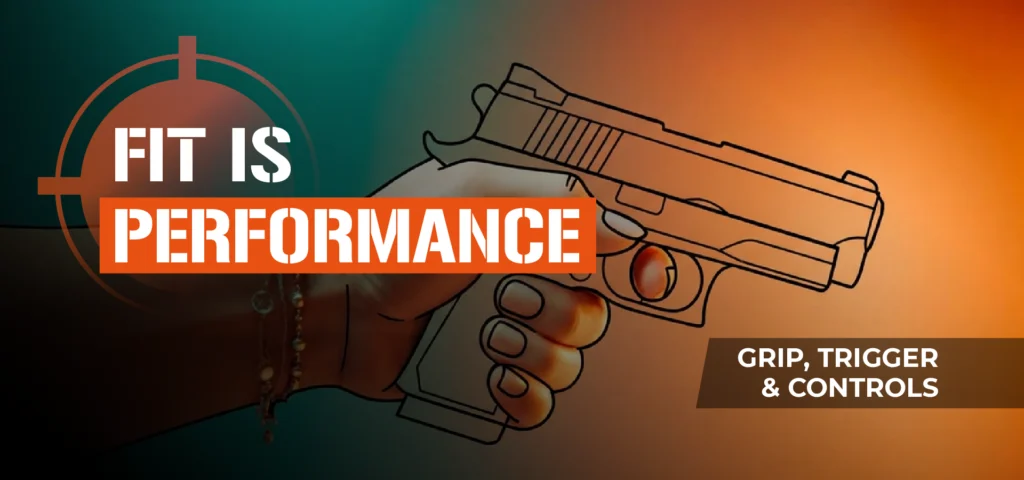
Start With Fit, Because Fit Is Performance
Thinking about caliber or capacity might be sexy…
But sexy doesn’t always mean right
First, you need to start with fit. A firearm can be reliable, well‑reviewed, and highly recommended, but if it doesn’t fit your hands properly, its performance will always be compromised. Fit affects how comfortably you shoot, how well you stay in control, and how confident you feel every time you pick it up.
This is where attention to detail really matters,especially when you’re evaluating firearms in real‑world settings like a local gun store or range.
Grip Size and Hand Placement
Grip circumference, texture, and angle all influence how naturally a firearm sits in your hands. When the grip fits properly, your hands fall into place without forcing adjustments or overthinking each movement.
In real life, pay attention to moments like:
- Handling the firearm at a local gun shop or range.
- Drawing it from the counter or case and gripping it naturally.
- Reacquiring your grip between shots during practice.
- Shooting multiple magazines in a single session.
If the grip feels bulky, slick, or awkward during these moments, that’s important feedback.
Maintaining Control Without Over‑Gripping
A firearm that fits well allows you to maintain control without excessive pressure. If you’re squeezing harder just to feel secure, that often leads to fatigue and reduced consistency over time.
Watch for signs like:
- Hand or wrist fatigue after a short-range session.
- Needing to constantly readjust your grip.
- Feeling tense instead of settled while shooting.
- Losing control as the session goes on.
Trigger Reach and Finger Comfort
Trigger reach plays a big role in how smoothly you can shoot. Ideally, your finger should rest comfortably on the trigger, allowing you to press straight back without shifting your grip.
This becomes especially noticeable when:
- Dry‑firing at the counter or range
- Shooting slow, deliberate shots
- Practicing follow‑up shots
- Training for consistency rather than speed
Proper reach supports better trigger control and reduces unnecessary movement.
Signs the Trigger Reach Isn’t Right for You
Small discomforts here tend to show up quickly. Pay attention if you notice:
- Stretching or straining to reach the trigger
- Pulling the trigger at an angle
- Adjusting your grip between shots
- Inconsistent trigger control as you practice
If something feels off, it’s worth listening to that instinct.
Control Placement That Actually Works for You
Safeties, slide stops, and magazine releases should be easy to reach and operate without breaking your grip. If you have to shift your hand significantly to use a control, it can interrupt your flow and affect performance.
Real‑world checks include:
- Engaging or disengaging the safety during practice
- Locking the slide back at the range
- Dropping a magazine during reloads
- Manipulating controls while wearing gloves or under time pressure
The Importance of Recoil
Do you want to focus on a single thing?
This is it
How the gun feels in your hands and how well you can control it, especially after a few rounds.
Recoil isn’t just physics; it’s about comfort, control, and confidence. If a firearm makes you tense, flinch, or rethink your next shot, no amount of sexiness can make up for it.
Felt Recoil vs. What the Specs Say
Numbers don’t tell the whole story.
Two firearms with the same caliber can feel completely different depending on grip, weight, and ergonomics. The question isn’t, How much kick does it have?”
It’s: Can I handle it and still feel confident?
Try noticing this in real-life moments:
- Shooting at your local range for more than one magazine.
- Practicing consecutive follow-up shots.
- Testing it with different brands of ammo.
- Dry-firing to feel the movement and trigger reset.
Can You Operate It Easily and Consistently?
A firearm can look perfect, feel great in your hands, and still not be the right choice if operating it feels like a chore.
Performance isn’t just about how it shoots; it’s about how naturally you can run it.
If using your firearm feels complicated or frustrating at the range, it’s probably not going to magically become easier when adrenaline enters the chat.
Racking the Slide With Confidence
- Slide tension and technique considerations
Some slides move smoothly while others require more effort. Technique helps, but the firearm should still feel cooperative rather than stubborn or intimidating to manipulate. - When difficulty becomes a performance issue
If racking the slide feels inconsistent, causes fatigue, or makes you hesitate during training, that’s a sign the firearm may not support reliable, confident operation.
Loading, Releasing, and Seating Magazines
- Magazine weight, springs, and capacity tradeoffs
Higher capacity often means stronger magazine springs, which can affect comfort during loading and repeated practice sessions. - Ease of reloads during practice and training
Magazines should seat naturally and release without struggle. Reloading should feel like an instinct for you, something that you can do repeatedly, not like a strength challenge.
Clearing Common Malfunctions
- Why simplicity matters under pressure
A firearm that’s easy to troubleshoot helps reduce stress and keeps you focused on staying safe and in control. - Evaluating how intuitive the platform feels
Malfunction clearing steps should feel logical and easy to remember. If the process feels confusing during practice, it is likely to feel even more confusing under pressure.
Smaller Doesn’t Always Mean Better
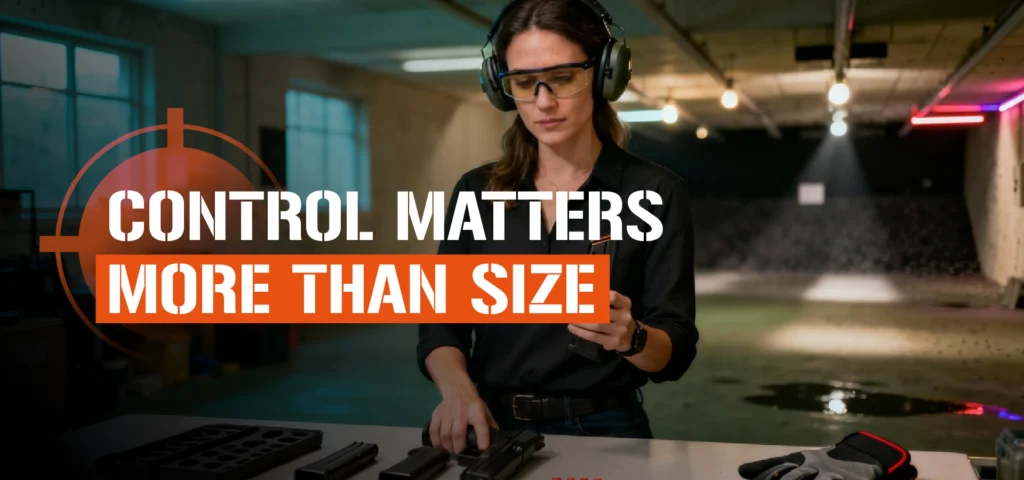
Somewhere along the way, we, women, were told that smaller firearms are automatically the better choice.
Smaller sounds easier. Lighter sounds more manageable. And yes, sometimes they are, but not always.
Fit, balance, and control matter far more than size alone.
The goal isn’t choosing what looks easier to handle. It’s choosing what actually allows you to shoot confidently and consistently.
The Tradeoffs of Compact and Lightweight Firearms
- Increased recoil and reduced control
Lighter firearms often transfer more recoil into your hands, which can make follow-up shots slower and shooting sessions more fatiguing.
Remember that what looks easier to carry doesn’t always feel easier to shoot.
- Shorter sight radius and grip compromises
Compact designs can mean less room for your hands and a shorter distance between sights, which may affect stability and accuracy, especially during longer practice sessions.
Choosing What You Can Control Best
- Why shootability should guide size decisions
A firearm you can control comfortably will almost always outperform one that simply feels easier to conceal or carry. Confidence grows when the firearm responds naturally to your movements. - Matching the firearm to its intended use
A firearm intended for range training, home defense, or concealed carry may require a different balance of size, weight, and control.
The best choice is the one that supports how you realistically plan to use it.
Conclusion: The Best-Performing Firearm Is the One That Works for You
So yes… we’re pretty badass when it comes to making decisions, and choosing a firearm should be no different.
By now, we know that real performance doesn’t come from picking what looks impressive or what someone else insists is the right choice. The best performance comes from choosing a firearm that fits our hands, supports our specific needs, and simply feels right every time we handle it.
When a firearm truly fits, everything else becomes easier.
Training feels more natural. Confidence grows faster. And the experience shifts from doubting to trusting yourself and your skills.
And the best firearm?
Isn’t the one someone else chooses for you. It’s the one that makes you feel capable, prepared, and completely confident in your decision.
Frequently Asked Questions
Do women need different firearms than men?
Not necessarily, but women often benefit from evaluating fit, ergonomics, and controllability more carefully. Hand size, grip strength, and comfort can influence how well a firearm performs. The best choice isn’t based on gender; it’s based on what allows you to operate the firearm safely and confidently.
Is a smaller firearm always easier for women to handle?
No. Smaller firearms are often lighter, which can increase felt recoil and reduce control. While compact firearms can be easier to carry, they aren’t always easier to shoot. Many women find that mid-size firearms provide better balance, stability, and comfort during training.
How can I tell if a firearm fits my hands properly?
A firearm generally fits well when:
- You can reach the trigger comfortably without adjusting your grip.
- Controls like the magazine release and safety are easy to operate.
- The grip feels secure without excessive squeezing.
- You maintain consistent control during shooting sessions.
If you constantly adjust your grip or feel strain, it may not be the best fit.
How important is recoil when choosing a firearm?
Recoil plays a major role in comfort, accuracy, and confidence. If recoil feels difficult to manage, it can lead to fatigue, flinching, and inconsistent shooting. Choosing a firearm with manageable recoil helps build skill and encourages regular training.
Should I test a firearm before buying it?
Whenever possible, yes. Renting or testing firearms at a range allows you to evaluate comfort, control, and ease of operation in real-life conditions. Hands-on experience often reveals details that specifications and reviews cannot.