Have you ever thought of buying a firearm online and then stopped for a moment, wondering how that actually works?
For many people, the idea brings up a mix of curiosity and hesitation, which, in all honesty, is a good thing.
Firearms aren’t an impulse purchase, and the process shouldn’t feel rushed or unclear.
Online gun marketplaces can seem confusing at first.
You’re browsing listings on a screen instead of standing in a store, you’re not walking out with anything in hand, and yet you’re dealing with a real, regulated product. That naturally leads to questions about legality, safety, and what happens after you click buy.
Lucky you, at Auction Armory, we are experts in knowing how online firearm marketplaces work, and we are here to walk you through the ins and outs of acquiring a firearm online.
Are Online Gun Marketplaces Legal?
Yes, but rules are important.
When people hear online firearms, they often imagine a loophole or a system that operates outside the law. In reality, online gun marketplaces exist because of regulation, not in spite of it.
In the United States, firearms sales are governed by federal law, with additional rules set at the state level.
What online marketplaces do is bring visibility and structure to that system, connecting buyers and sellers while keeping the legal transfer process intact.
The most important thing to understand is this: you cannot legally buy a firearm online and have it shipped directly to your home. Federal law requires that firearms be transferred through a licensed dealer, known as a Federal Firearms Licensee (FFL).
That means every compliant online purchase must end with:
- A licensed dealer handling the transfer.
- An in-person background check.
- Verification that the buyer meets all legal requirements.
Bear in mind that state laws may add waiting periods, additional documentation, or restrictions on certain firearms, which is why responsible marketplaces like we at Auction Armory encourage buyers to understand their local regulations before moving forward.
Key Players in an Online Gun Marketplace
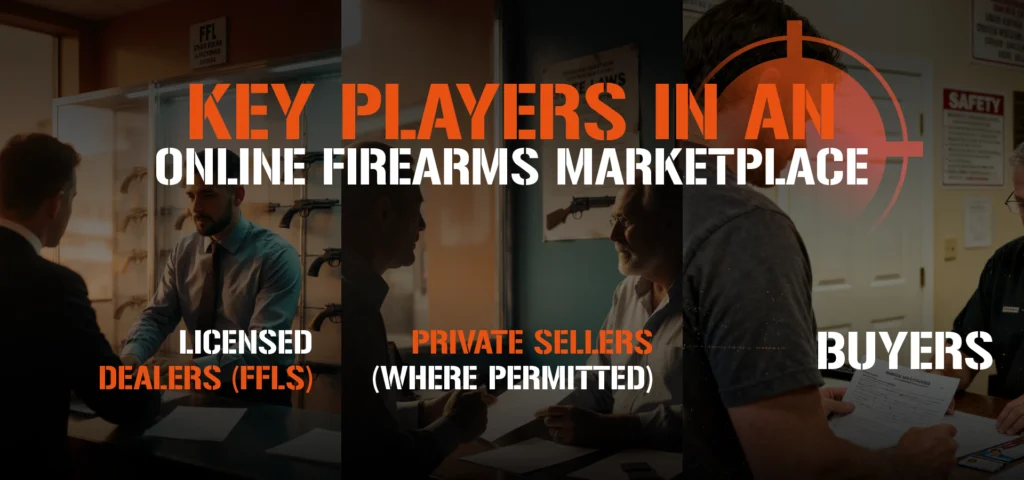
Behind every online firearm listing, there’s more happening than what shows up on a screen. Online gun marketplaces work because several different players are involved, each with a specific role and legal responsibility.
Understanding who they are helps clarify why the process looks the way it does, and why safety checks are built in from the start.
Licensed Dealers (FFLs)
Licensed dealers, often referred to as FFLs (Federal Firearms Licensees), are the backbone of any legal firearm transaction.
An FFL is a business or individual authorized by the federal government to sell and transfer firearms. Whether a firearm is found online or in a local store, a licensed dealer is required to complete the transfer to the buyer.
Their role isn’t just administrative. FFLs are responsible for:
- Conducting background checks.
- Verifying buyer eligibility.
- Maintaining required records.
- Ensuring the transfer complies with federal and state laws.
In an online marketplace, the firearm is shipped to an FFL chosen by the buyer, not directly to the buyer. This final, in-person step is what turns an online listing into a lawful transfer.
Private Sellers (Where Permitted)
In some states, private individuals are allowed to sell firearms under specific conditions. When permitted, online marketplaces may allow private sellers to list firearms, but typically with additional rules and visibility requirements.
Private sales are often more regulated than people realize. State laws can require:
- Transfers through an FFL.
- Background checks.
- Specific documentation or waiting periods.
Because these laws vary widely, responsible marketplaces clearly outline when private listings are allowed and what steps must still be followed. The presence of a private seller does not remove the legal obligations tied to the transfer.
Buyers
Buyers play an equally important role in the process, and with that comes responsibility.
To legally purchase a firearm online, buyers must:
- Meet age requirements
- Be legally eligible to own a firearm.
- Comply with federal and state regulations.
- Complete the transfer through an FFL.
Online marketplaces don’t change these requirements. What they do provide is access to information, listings, and licensed sellers while keeping the final step grounded in an in-person, regulated process.
Responsible ownership starts well before the transfer.
How the Online Firearm Buying Process Works (Step-by-Step)
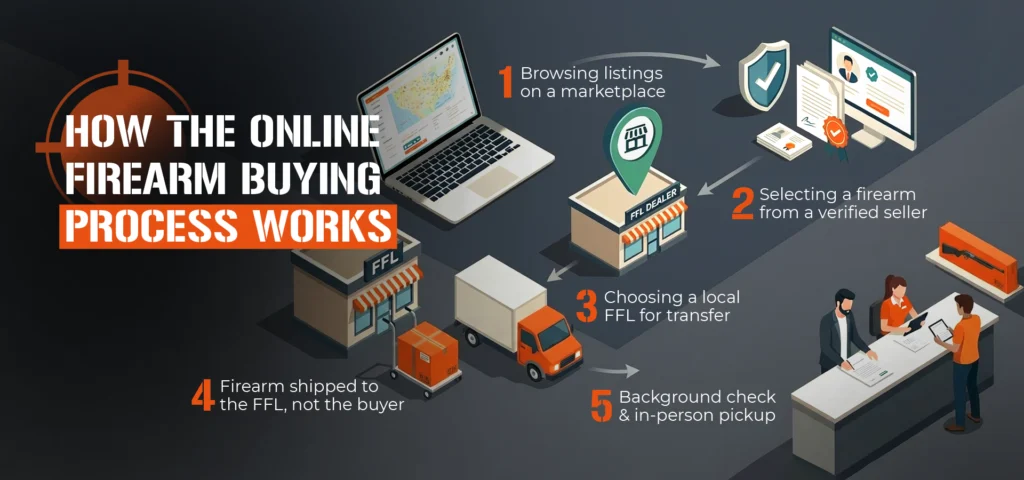
Buying a firearm online isn’t a single action; it’s a sequence of regulated steps designed to ensure the transfer happens legally and responsibly. Breaking the process down helps remove a lot of the mystery around what actually happens after a listing is selected.
Browsing Listings on a Marketplace
The process starts with browsing firearms listed by licensed dealers and, where permitted, private sellers. Online marketplaces organize these listings so buyers can compare options, review details, and understand who the seller is before moving forward.
At this stage, no transaction has taken place. It’s about research, education, and making an informed decision, not rushing into a purchase.
Selecting a Firearm From a Verified Seller
Once a buyer chooses a firearm, they’re committing to purchase it from that specific seller. Responsible marketplaces clearly identify seller credentials and outline the next required steps so expectations are set early.
Importantly, selecting a firearm online does not mean ownership has transferred. That only happens later, in person, through a licensed dealer.
Choosing a Local FFL for Transfer
Before the firearm can be shipped, the buyer selects a local Federal Firearms Licensee (FFL) to handle the transfer. This is a legal requirement and a key safety measure in the process.
The chosen FFL acts as the final checkpoint, ensuring all federal and state laws are followed before the firearm is released.
Firearm Shipped to the FFL, Not the Buyer
After the FFL is confirmed, the seller ships the firearm directly to that licensed dealer. Firearms are not shipped to residential addresses, and they do not bypass this step.
Once received, the FFL logs the firearm into their records and prepares it for the transfer process.
Background Check and In-Person Pickup
The final step happens face-to-face.
The buyer visits the FFL location to complete the required paperwork and background check.
If approved, the firearm is transferred to the buyer in accordance with applicable laws, including any waiting periods or additional state-level requirements. Only at this point does legal ownership change hands.
How Marketplaces Promote Safety and Compliance
A well-run online gun marketplace is a complete environment designed to support lawful, responsible transactions from start to finish.
The best platforms put safety and compliance front and center, often in ways that aren’t immediately visible unless you know what to look for.
Here’s how responsible marketplaces help keep the process grounded and transparent.
Seller Verification Processes
Before a firearm is ever listed, reputable marketplaces take steps to verify who is allowed to sell on their platform.
This typically includes:
- Confirming federal firearms licenses (FFLs) where required.
- Reviewing seller credentials and documentation.
- Setting clear rules around who can list firearms and under what conditions.
These checks help ensure buyers are interacting with legitimate sellers and that listings meet legal requirements from the outset.
Listing Moderation
Not every listing submitted makes it live, and that’s by design.
Marketplaces actively review listings to:
- Ensure firearm descriptions are accurate and complete.
- Remove misleading, non-compliant, or unclear content.
- Enforce platform-specific safety and compliance standards.
This layer of moderation reduces confusion for buyers and helps prevent listings that could create legal or safety risks.
Prohibited Items and Content Policies
Responsible platforms clearly define what is not allowed.
Prohibited policies often cover:
- Restricted or illegal firearm types.
- Controlled components or accessories.
- Content that promotes unsafe, unlawful, or irresponsible use.
By enforcing these boundaries, marketplaces help protect both users and the broader community while staying aligned with federal and state regulations.
Educational Resources Offered by Responsible Platforms
Beyond transactions, many marketplaces invest in education.
These resources may include:
- Guides explaining the legal buying process.
- Firearm safety and storage information.
- Articles that help first-time buyers understand their responsibilities.
- Compliance-focused FAQs and policy explanations.
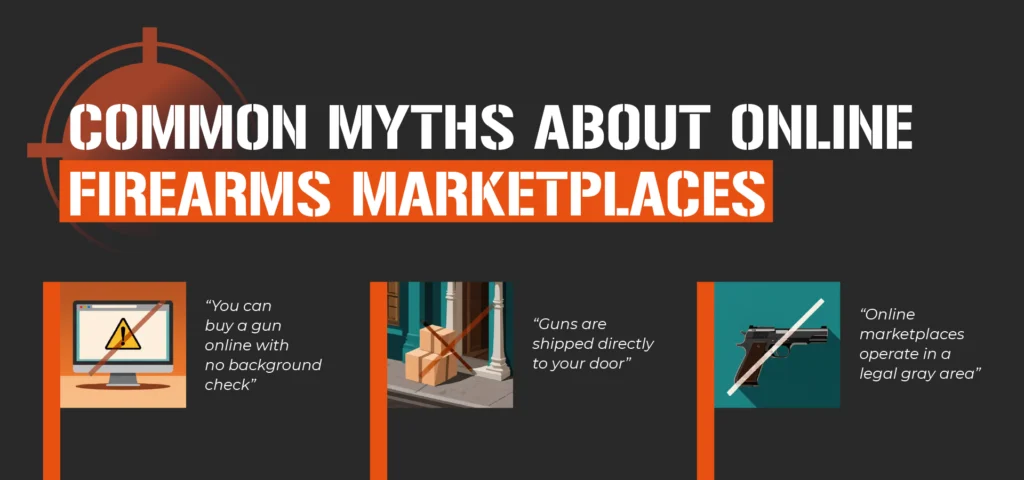
Common Myths About Online Firearms Marketplaces
There’s a lot of noise around online firearm sales, and much of it is shaped by assumptions rather than how the system actually works.
Breaking these myths down one by one helps bring the conversation back to the facts that matter.
Myth: You Can Buy a Gun Online With No Background Check
A legal firearm purchase made through an online marketplace still requires a background check. The firearm must be transferred through a licensed dealer, where the buyer completes all required paperwork and eligibility verification.
The online portion doesn’t replace this step; it leads to it.
Myth: Guns Bought Online Are Shipped Directly to Your Door
Firearms are not legally shipped to a buyer’s home. Instead, they are sent to a licensed dealer selected by the buyer.
Only after an in-person visit, background check, and approval does the transfer take place. Shipping directly to a residential address, bypassing this process, is not how compliant marketplaces operate.
Myth: Online Gun Marketplaces Operate in a Legal Gray Area
Reputable online gun marketplaces are designed around federal and state regulations.
They rely on licensed sellers, required transfers, and clearly defined policies to operate lawfully.
Rather than avoiding regulation, responsible platforms make compliance visible and built-in.
Myth: Buying a Firearm Online Is Less Safe Than Buying in a Store
The safety of a firearm purchase isn’t determined by where it’s listed; it’s determined by how the transfer is handled.
In both online and in-person purchases, the final steps involve the same safeguards: licensed dealers, background checks, and in-person verification. When done correctly, the level of safety remains consistent.
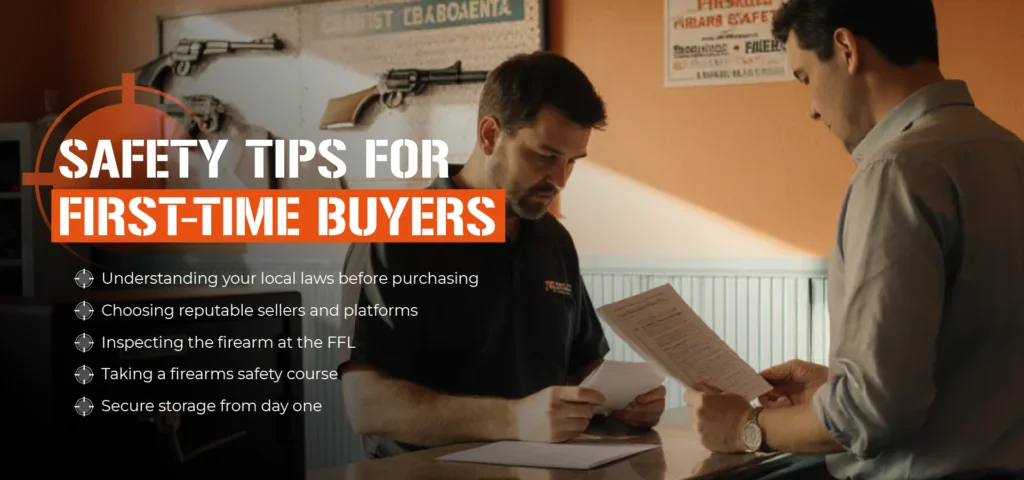
Safety Tips for First-Time Buyers
If you’re buying a firearm for the first time, it’s normal to have questions and even a bit of hesitation. That pause is part of being responsible. Safety isn’t something you figure out later; it starts with the choices you make before, during, and right after your purchase.
Here’s how you can approach the process with confidence and care.
Understanding Your Local Laws Before Purchasing
Before you buy, take a moment to understand the laws that apply where you live. Firearm regulations can vary by state and, in some cases, by local jurisdiction.
Knowing this ahead of time helps you:
- Avoid surprises during the transfer process.
- Understand waiting periods or additional requirements.
- Make choices that align with local regulations.
If something feels unclear, that’s a sign you probably need more information.
Choosing Reputable Sellers and Platforms
Where you choose to shop plays a big role in how safe and transparent your experience will be.
You’ll want to look for sellers and platforms that:
- Clearly explain how the legal transfer works
- Require firearms to be shipped to an FFL.
- Are upfront about compliance and policies.
- Provide educational resources, not just listings.
Inspecting the Firearm at the FFL
When you visit the FFL to complete your transfer, you’re not just there to sign paperwork; this is your opportunity to see the firearm in person.
Take your time to:
- Confirm it matches the listing.
- Look over its condition.
- Ask questions if something doesn’t feel right.
A good FFL understands that first-time buyers may need extra clarity and will support you through the process.
Taking a Firearms Safety Course
Even if you’re not required to take a safety course, choosing to do so can make a real difference.
Training helps you:
- Learn safe handling habits.
- Understand your responsibilities as an owner.
- Build confidence before regular use.
Secure Storage From Day One
Before your firearm ever comes home with you, you should have a storage plan in place.
That means thinking about:
- How do you prevent unauthorized access.
- Using a safe, lock box, or locking device.
- Storing firearms and ammunition securely.
Safe storage protects you, the people around you, and the firearm itself, and it starts the moment ownership begins.
Frequently Asked Questions About Online Gun Marketplaces
Do you need a background check to buy a gun online?
Yes. If you’re buying a firearm legally through an online marketplace, you’ll still complete a background check in person through a licensed dealer before the firearm is transferred to you.
Can a firearm bought online be shipped to your home?
No. Firearms are shipped to a licensed dealer (FFL), not to your residence. You’ll pick it up in person after completing the required steps.
Are online gun marketplaces legal in all states?
Online marketplaces operate under federal law, but state regulations vary. You’re responsible for understanding the laws that apply where you live before purchasing.
Is buying online different from buying in a store?
The final steps are the same. In both cases, the transfer happens in person through a licensed dealer with a background check.
What should you do if you’re unsure about the process?
Slow down and get informed. Reputable marketplaces, licensed dealers, and safety resources are there to help you understand each step before moving forward.