If you’ve ever bought a firearm online, sold one to someone in another state, or browsed a marketplace listing and seen the words “FFL transfer required,” you might have paused and thought, Okay… but what does this mean?
The FFL transfer process can feel intimidating at first, not because it’s complicated, but because it’s often explained in legal language that doesn’t reflect how real people actually buy and sell firearms.
The good news is that the process is pretty straightforward.
FFL transfers are designed to protect you, the seller, and the community by ensuring firearms change hands legally, responsibly, and safely.
Whether you’re buying your first firearm or simply want to make sure you’re doing things the right way, after going over this article, you’ll leave knowing exactly what to expect and why it matters.
What Does FFL Stand For?
FFL stands for Federal Firearms License, and while it sounds official, because it is, the idea behind it is simple.
An FFL is nothing more than the license issued by the federal government allowing a person or a business to legally sell, receive, and transfer firearms.
If you’re buying or selling a firearm, the FFL is the trusted middle step that guarantees everything is done by the book.
FFLs exist to create accountability and safety in firearm transactions, especially when firearms are sold online or across state lines.
So all that paperwork?
Is definitely worth it.
When Is an FFL Transfer Required?
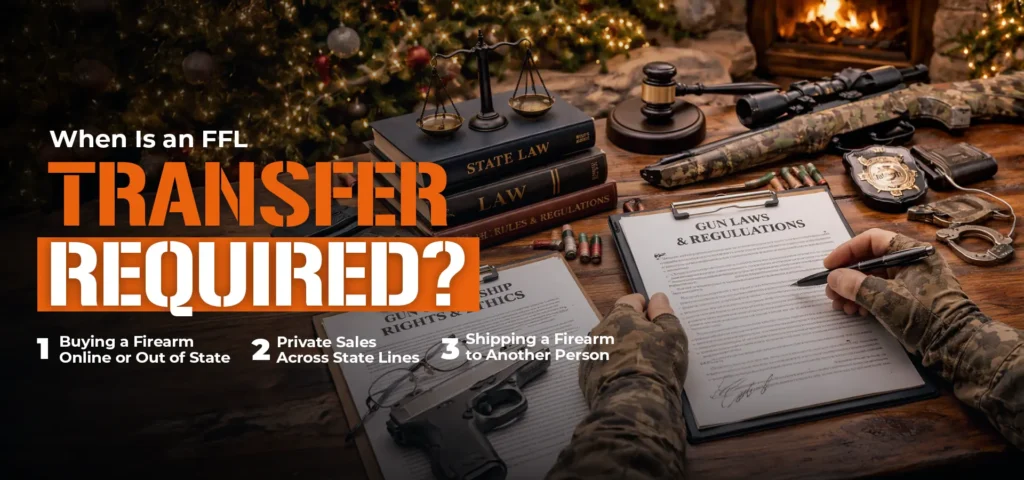
Buying a Firearm Online or Out of State
If you’re purchasing a firearm online or from a seller in another state, an FFL transfer is almost always required.
Even though the transaction starts digitally, the firearm itself must be shipped to a licensed FFL dealer in your state.
Something fundamental for the final handoff to happen legally, with proper verification and documentation.
Private Sales Across State Lines
Private sales can be kinda confusing.
If the buyer and seller live in different states, federal law requires the firearm to be transferred through an FFL. It doesn’t matter if both parties are legally allowed to own firearms.
The FFL acts as the neutral third party that confirms everything checks out.
Shipping a Firearm to Another Person
Anytime a firearm is being shipped to someone else, whether it’s a sale, trade, or transfer, it typically must go through an FFL on the receiving end.
This helps prevent unlawful possession and helps the recipient meet all legal requirements.
Situations That May Be Different
Some in-state private transfers may follow different rules depending on where you live. Because laws vary, checking with your local FFL before moving forward is always the safest next step.
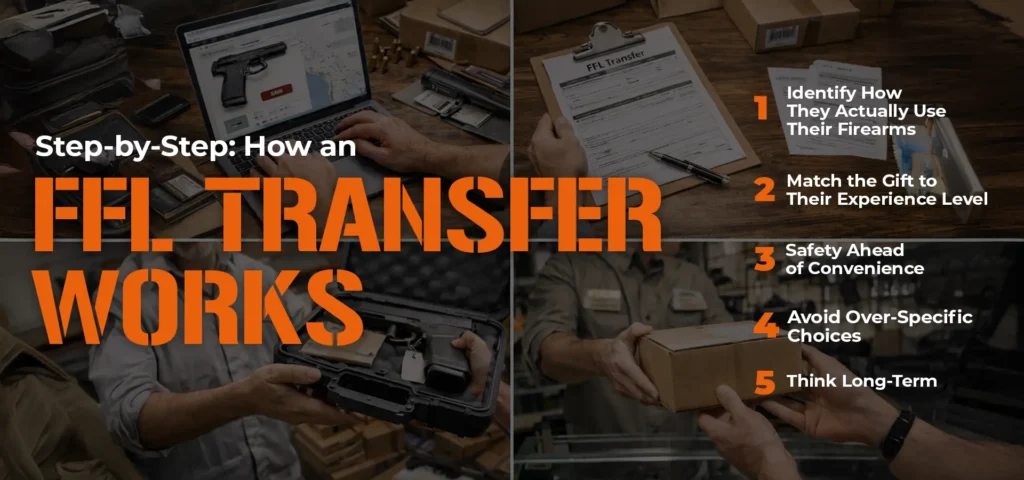
Step-by-Step: How an FFL Transfer Works
Step 1: Choose a Local FFL Dealer
Before anything ships or paperwork begins, you’ll want to choose the FFL dealer who will handle the transfer.
This is the foundation of the entire process, and getting it right up front saves you time, money, and frustration later.
When choosing an FFL, focus on clarity and communication, not only proximity.
Look for a dealer who:
- Accepts FFL transfers (not all licensed dealers do)
- Clearly lists their transfer fees and payment policies.
- Has experience with online or private-party transfers.
- Explains local and state requirements without guesswork.
- Responds quickly when you have questions.
It’s also a good idea to confirm how they prefer to receive the firearm; some dealers require advance notice or paperwork before a shipment arrives.
Think of your FFL dealer as your guide through the legal side of the transfer.
A good one won’t rush you or leave you guessing.
Instead, they’ll help make sure everything is handled safely, correctly, and in full compliance from the very first step.
Step 2: Purchase or Arrange the Firearm
Once you’ve chosen your FFL dealer, it’s time to complete the purchase or arrange the transfer. This is the part most people are familiar with, but there are a few important details you need to keep in mind.
If you’re buying from an online retailer or marketplace, like Auction Armory:
- Complete the purchase as normal on the seller’s website.
- Select your chosen FFL dealer at checkout or provide their information.
- The seller will ship the firearm directly to the FFL, not to you.
If you’re buying from a private seller:
- Share your FFL’s contact details with the seller.
- Confirm the seller understands the firearm must ship to the FFL.
- Some FFLs may need to exchange license information before shipping.
Step 3: The Firearm Is Shipped to the FFL
At this point, the seller takes over, and the firearm is shipped to your chosen FFL dealer.
Right here is where the legal handoff officially begins.
- The firearm is shipped directly to the FFL, never to your home.
- Once it arrives, the FFL logs it into their records and secures it until the transfer is complete.
That’s it on your end, for now. You don’t need to rush in or fill out paperwork yet.
Your FFL will typically contact you once the firearm has arrived and is ready for the next step.
This controlled process is intentional.
Shipping firearms to licensed dealers is how you can rest knowing they’re received, stored, and documented properly from the moment they enter the state.
Step 4: Background Check and Paperwork
Has your firearm finally arrived?
Great, this is when you’ll visit the dealer in person to complete the transfer. As you can guess, this is where the legal requirements are finalized, and it’s also the most important from a safety standpoint.
During your visit, you’ll:
- Complete ATF Form 4473, which records your information and the firearm details.
- Present a valid government-issued ID that matches your current address.
- Undergo a background check, as required by federal law.
Depending on where you live, there may also be a mandatory waiting period before you can take possession of the firearm, even if your background check is approved immediately.
Most checks are straightforward, but sometimes a response comes back as delayed.
This doesn’t mean something is wrong; it simply means the system needs more time to review the information. Your FFL will explain what happens next and when you can return.
Step 5: Transfer Completion, Delay, or Denial
After the background check is processed, one of three things will happen.
- Approved: You can complete the transfer and take possession of the firearm once any required waiting period has passed.
- Delayed: The system needs more time to review the information. This is common and doesn’t automatically mean there’s a problem.
- Denied: The transfer cannot be completed, and the firearm will remain with the FFL. Your dealer can explain the general next steps available to you.
This final step reinforces why FFL transfers exist in the first place: to make sure firearms only change hands when all legal and safety requirements are met.
When the process is complete, you can move forward knowing everything was handled correctly and responsibly.
How Long Does an FFL Transfer Take?
Typical Timelines
In many cases, an FFL transfer can be completed within one to three days after the firearm arrives at the dealer. If your background check is approved quickly and your state doesn’t require a waiting period, you may be able to pick up the firearm the same day you complete the paperwork.
That said, timing can vary depending on location, dealer processes, and volume.
Factors That Can Cause Delays
Delays don’t always mean something is wrong. Common reasons include:
- High background check volume.
- Incomplete or mismatched information.
- State-specific review requirements.
- Mandatory waiting periods.
Your FFL will usually explain what’s causing the delay and what to expect next.
Instant Approval vs. Waiting Periods
An instant approval means your background check clears immediately.
A waiting period, on the other hand, is a state-level requirement that enforces a set amount of time before pickup, even after approval.
Remember that laws vary by state, so checking with your local FFL is always the safest way to get an accurate timeline.
How Much Does an FFL Transfer Cost?
FFL transfer costs aren’t fixed, and that’s usually the first thing that surprises people.
Fees are set by individual dealers, not the federal government, which means prices can vary even within the same city.
Here’s what typically affects the cost:
- Standard transfer fees often range from $20 to $75.
- Dealer policies, including whether they handle high transfer volume.
- Location and state requirements, which may add compliance steps.
- Multiple firearms can increase the total fee.
You may also see additional costs such as:
- Shipping fees from the seller to the FFL.
- Storage fees if a firearm isn’t picked up within a set timeframe.
- Background check fees in states where they’re charged separately.
The best way to avoid surprises is to ask your FFL upfront for a full breakdown of fees before the firearm ships.
Trust us on this. Clear expectations make everything easier.
Common FFL Transfer Mistakes (and How to Avoid Them)
Even though the process is straightforward, small missteps can slow things down or create unnecessary stress.
Most of these are easy to avoid once you know what to watch for.
- Not confirming the FFL accepts transfers before completing a purchase.
- Assuming laws are the same everywhere, especially across state lines.
- Using mismatched personal information, such as an outdated address on your ID.
- Failing to communicate with the seller and FFL about shipping and paperwork.
- Waiting too long to pick up the firearm can lead to storage fees.
A quick call or email to your FFL before the firearm ships can prevent nearly all of these issues.
Frequently Asked Questions About FFL Transfers
Can a private seller ship a firearm to an FFL?
Yes. A private seller can ship a firearm to an FFL dealer, as long as the dealer agrees to receive it and all legal requirements are followed.
Can an FFL refuse a transfer?
Yes. FFLs can decline transfers based on their policies or legal concerns. This is part of their responsibility as licensed dealers.
What happens if my background check is delayed or denied?
A delay means more review time is needed. A denial means the transfer cannot be completed, and the firearm remains with the FFL.
Can someone else pick up the firearm for me?
No. The person who completes the background check must be the one who takes possession of the firearm.