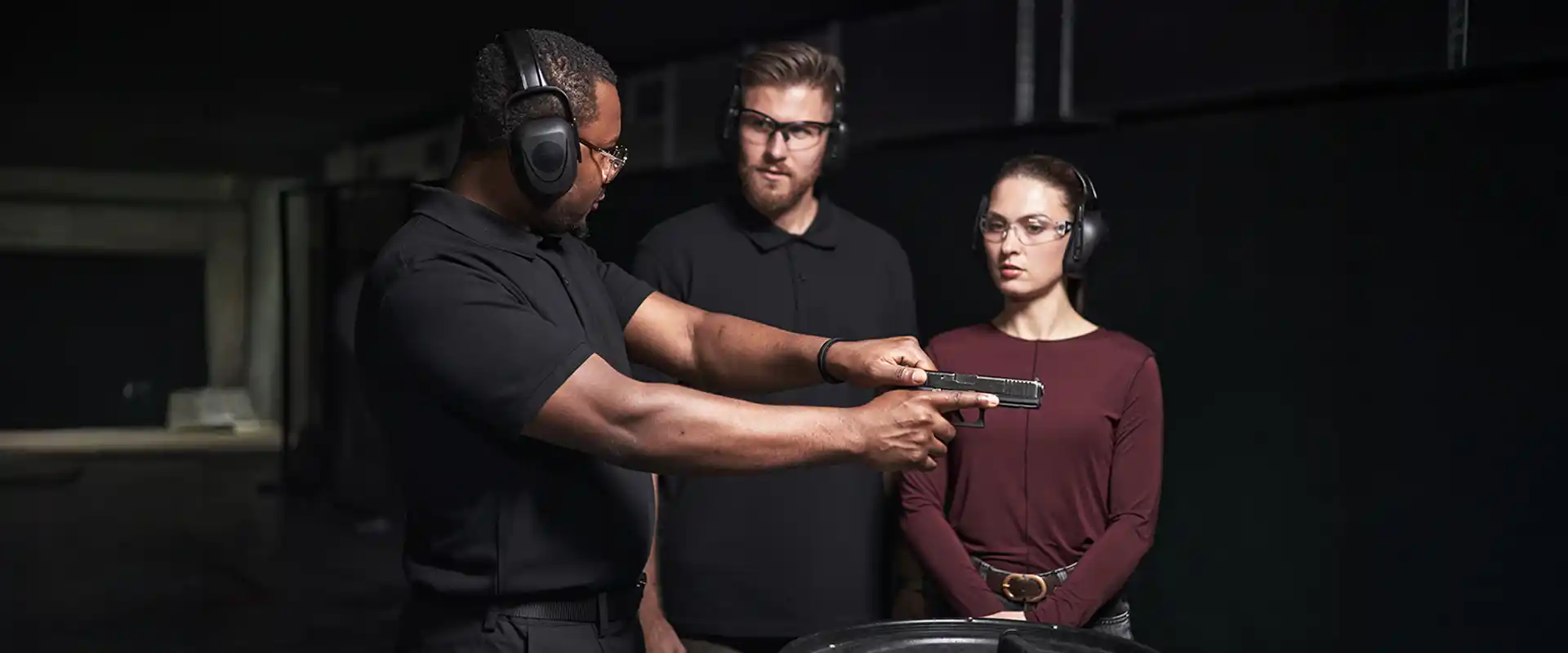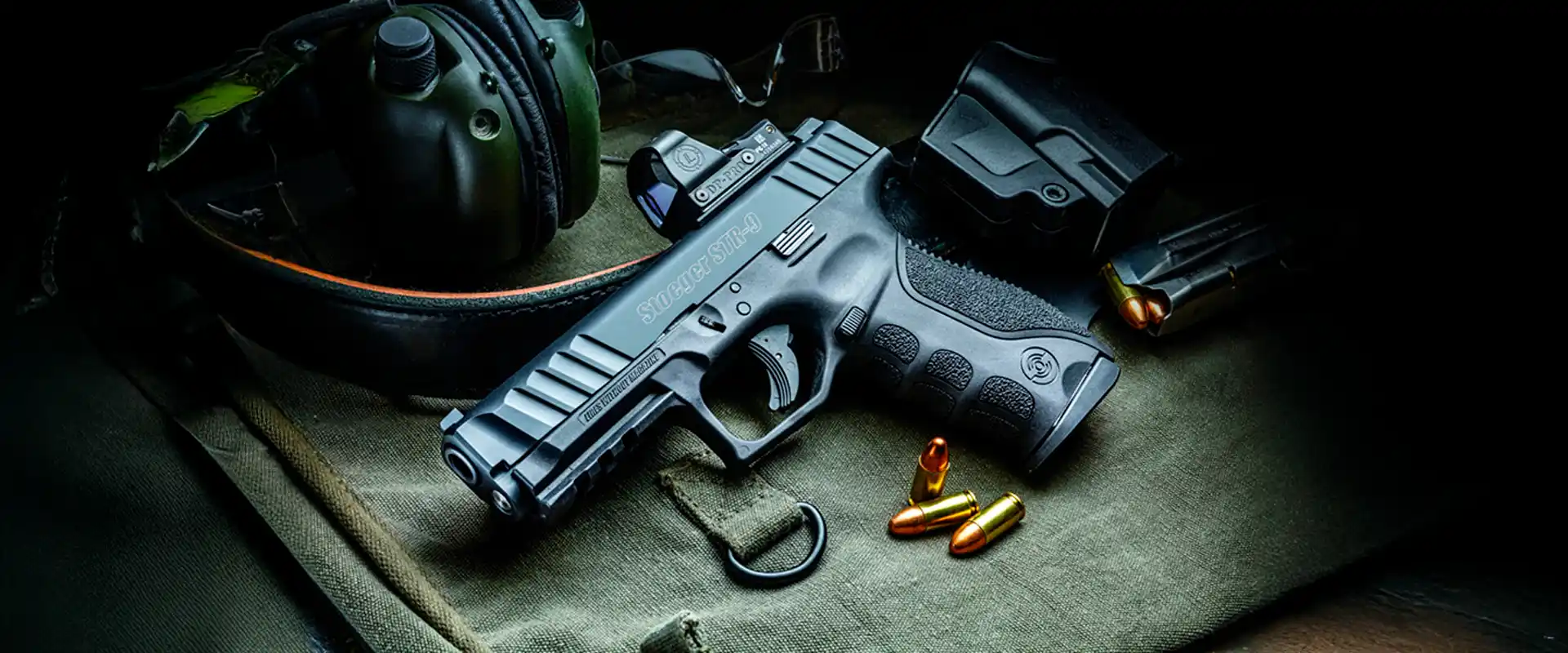
There’s no single reason why you’d need a firearm. Beyond the action and adrenaline often portrayed in media, firearms serve a wide range of practical, sporting, and historical purposes. For some, they’re essential tools for ethical hunting and wildlife management. For others, they play a role in home and personal defense, competitive shooting, or preserving pieces of history through collecting.
And yes…
Each of these purposes demands different characteristics, making it necessary to understand what goes well or not with their daily use.
A rifle built for long-range precision won’t serve the same role as a compact handgun designed for defensive scenarios, and a competition firearm is engineered very differently from a collectible piece meant for preservation.
The solution?
Walk with us through the main firearm categories by purpose, helping you comprehend what distinguishes hunting, defense, competition, and collectible firearms
Without further ado, let’s begin.
This content is intended for educational purposes. Always research your local laws and prioritize proper training, safe handling, and responsible ownership.
Why Purpose Matters When Choosing a Firearm
It’s a Tool
We get it, choosing a firearm can feel a bit like stepping into an action movie.
But before getting too excited about looks or power, the most important question is simple: what do you actually need it for? Firearms are tools, and like any tool, they’re designed for specific jobs. Accuracy, caliber, ergonomics, and reliability all change depending on whether the goal is hunting, home defense, competition, or collecting.
Rules, Skills, and Real-World Use
Purpose also matters from a legal and practical standpoint. Different firearm categories come with different regulations around ownership, storage, transport, and modifications. On top of that, not every firearm fits every skill level. Some are beginner-friendly and forgiving, while others require consistent training and hands-on experience to use safely and effectively.
Look Beyond the Price
The cost of a firearm doesn’t stop at the checkout counter.
Ammunition, training, maintenance, and accessories all add up over time. Choosing a firearm that truly matches your purpose helps you invest smarter, avoid unnecessary upgrades, and build long-term confidence in your ownership.
Firearms for Hunting

So, are you into hunting? Great.
Then you already know not all firearms are the same. You may prefer something built for precision at longer distances. Maybe you want a tool you can rely on no matter what the weather looks like. Ultimately, the right choice comes down to what you’re hunting, where you’re hunting, and how you prefer to hunt.
Hunting firearms are designed with a purpose in mind. A rifle meant for big game in open terrain won’t serve you the same way a lightweight shotgun does in thick brush. Understanding the differences between categories helps you choose equipment that supports ethical harvesting, safety, and consistent performance in real-world conditions.
Common Hunting Firearm Categories
Bolt-Action Rifles
If accuracy is high on your list, bolt-action rifles are hard to ignore. They’re known for precision and reliability, especially for big game hunting where shot placement matters most.
Lever-Action Rifles
Compact and quick to handle, lever-actions are often preferred in wooded or dense environments. They offer practical performance at moderate ranges and are generally lightweight to carry.
Shotguns (Pump or Semi-Auto)
Shotguns are incredibly versatile. With the right load, they can handle birds, small game, and even certain big game within appropriate distances. If you want flexibility across seasons, this category often makes sense.
Muzzleloaders
More traditional and typically used during special hunting seasons. They require more preparation and maintenance, but many hunters appreciate the added challenge and heritage.
Typical Game Types and Matching Firearms
Small Game
For smaller animals, lighter calibers or shotguns are common. You’re looking for manageable recoil and controlled performance without excessive power.
Big Game
Centerfire rifles dominate here. Caliber selection becomes especially important to ensure effective range and responsible harvesting.
Upland Birds
Lightweight shotguns are ideal. You’ll likely be walking long distances, so portability and fast handling matter.
Waterfowl
Shotguns designed to perform reliably in wet conditions are key. Weather resistance and proper load selection make a difference in these environments.
Key Characteristics That Matter for Hunting
Caliber Selection
This isn’t about choosing the largest option available. It’s about matching the caliber to the size of the game and the distance you expect to shoot.
Accuracy and Range
Open fields demand different capabilities than dense woods. Your firearm should match the terrain just as much as the target.
Weight and Portability
You may carry your firearm for hours. Balance stability with comfort to avoid fatigue.
Weather Resistance
Hunting rarely happens in perfect conditions. Durable finishes and dependable performance in rain, humidity, or cold weather matter more than cosmetic details.
Pros and Cons of Hunting Firearms
Precision vs. Versatility
Rifles generally offer greater long-range precision. Shotguns offer flexibility across multiple types of game. The trade-off depends on how specialized you want your setup to be.
Recoil Management
More powerful calibers can mean stronger recoil. Comfort and control influence accuracy over time.
Maintenance Needs
Exposure to dirt, moisture, and temperature changes means regular cleaning is essential. Some platforms require more upkeep than others.
Firearms for Home and Personal Defense

Thinking about a firearm for home or personal defense?
That’s a different mindset than hunting. Here, the focus isn’t distance or sport, it’s reliability, control, and ease of use under stress.
When it comes to defensive firearms, simplicity matters. You want something dependable, manageable, and appropriate for your environment.
Common Defensive Firearm Categories
Handguns
Compact and easier to store securely, handguns are one of the most common choices for personal and home defense. These ones are known for being maneuverable in tight spaces and designed for close-range scenarios.
Shotguns
Often recommended for home defense due to their effectiveness at short distances. They can be straightforward to operate but may be larger and heavier than other options.
Defensive Rifles
Some people prefer rifles for stability and capacity. So if your focus is on control and accuracy, defensive options could work, though they require proper training and understanding of local laws.
What Makes a Firearm Suitable for Defense
Reliability
In a defensive situation, mechanical reliability is non-negotiable. The firearm must function consistently with proper maintenance.
Ease of Use Under Stress
Controls should be intuitive. The less complicated the manual of arms, the better.
Capacity and Reloading
Depending on the platform, capacity varies. Understanding how your firearm operates and practicing responsibly are essential.
Maneuverability
In a home environment, space is limited. Size and handling characteristics matter more than long-range performance.
Safety and Responsibility Considerations
Secure Storage
Quick access should never mean unsafe access. Proper storage solutions are part of responsible ownership.
Training & Practice
Owning a defensive firearm without training defeats the purpose. Regular practice builds familiarity and confidence.
Legal Awareness
Use-of-force laws vary by location. Understanding when and how defensive force is legally justified is critical.
Pros and Cons of Defensive Firearms
Handguns
- Compact and easier to store.
Require consistent training for accuracy.
Shotguns
- Effective at close range.
Larger size can limit maneuverability.
Rifles
- Stable platform and controllable.
May require more training and legal awareness.
Firearms for Competition Shooting
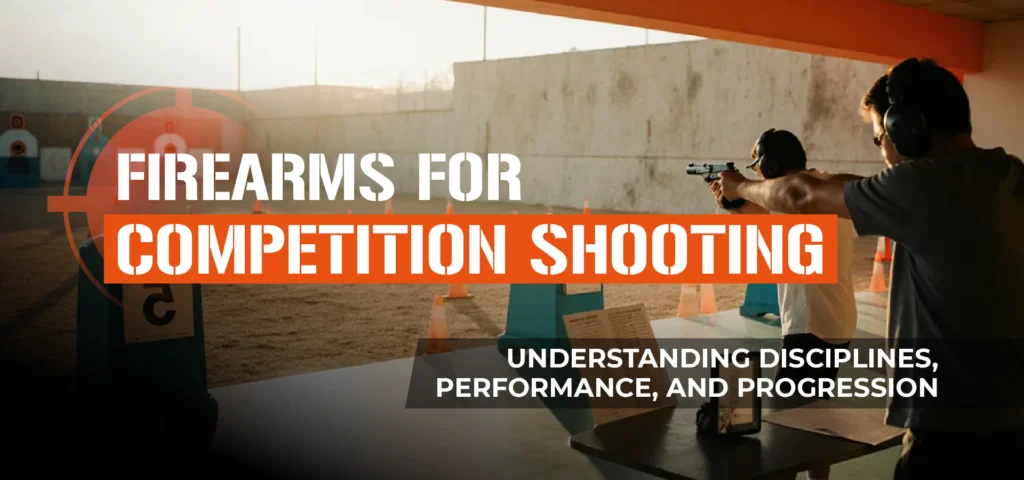
Firearms go to another level when you’re after a competition title.
Beyond your skills and expertise, you need to pick something that feels like a partner to your performance, not something that holds you back.
In competitive shooting, you can bet small details matter.
Trigger consistency, recoil control, ergonomics, and even how quickly you can transition between targets can influence results. Unlike hunting or defensive firearms, competition platforms are often built and tuned specifically for speed, precision, and repeatability.
Popular Shooting Disciplines
USPSA / IPSC
Fast-paced, dynamic handgun competitions focused on speed and accuracy.
IDPA
More scenario-based, emphasizing practical shooting skills and efficiency.
3-Gun
A combination of rifle, shotgun, and handgun stages. Versatility and transitions are key.
Precision Rifle Series (PRS)
Long-range rifle competition where consistency and accuracy are everything.
Trap, Skeet, and Sporting Clays
Shotgun disciplines focused on tracking and hitting moving targets.
Competition Firearm Categories
Competition Pistols
Often upgraded with enhanced triggers, improved sights or optics, and ergonomic modifications for faster follow-up shots.
Tuned Rifles
Built for stability and accuracy, especially in precision or multi-gun formats.
Competition Shotguns
Designed for rapid cycling, reduced recoil, and reliable performance across multiple stages.
Performance Factors That Matter
Trigger Quality
A consistent, clean trigger break helps improve accuracy and speed.
Recoil Management
The faster you recover from recoil, the faster you can take the next accurate shot.
Ergonomics and Fit
A firearm that fits your grip, stance, and shooting style reduces fatigue and improves control.
Optics and Customization
Many competition platforms allow for red dots, adjustable components, and aftermarket upgrades tailored to specific divisions.
Beginner vs. Advanced Setups
If you’re just starting, you don’t need the most customized firearm on the range.
Many competitions allow factory setups that perform extremely well. As you progress, you may choose to refine your platform based on discipline rules and personal performance goals.
Firearms for Collecting and Historical Interest

History lovers, this one’s for you.
Not every firearm is purchased to be used for a specific purpose, sometimes you acquire one simply to admire its historical value.
Maybe it’s tied to a defining moment in our past, connected to a well-known figure, or representative of a certain era in craftsmanship and design.
In this category, performance isn’t always the priority. Story, condition, and authenticity often matter more than modern upgrades or practical use. You’re not just owning a firearm; you’re preserving a piece of history, engineering, and cultural significance.
Common Collector Firearm Categories
Military Surplus
These often carry the weight of real-world history. Service-issued firearms, especially those with matching numbers or documented use, tend to attract strong collector interest. The closer they are to original condition, the more compelling they become.
Antique Firearms
Older models showcase how design and engineering have evolved over time. From early repeating rifles to historic revolvers, antiques often appeal to collectors who appreciate mechanical innovation and craftsmanship from another era.
Limited Production Models
When something was only made in small numbers, scarcity naturally increases interest. Limited runs, discontinued models, or unique factory variations can become highly desirable over time.
Commemorative Editions
Special engravings, historical markings, or milestone releases can also draw attention. While not all commemorative items might be considered part of our history, some become meaningful additions depending on demand and condition.
Why People Collect Firearms
Connection to History
For some, it’s about holding a tangible piece of the past, something that represents a specific conflict, time period, or technological shift.
Craftsmanship and Design
Older firearms often reflect a level of detail and machining that feels different from modern mass production. Wood stocks, engraving, and hand-fitted parts can be part of the appeal.
Investment Interest
While value isn’t guaranteed, certain rare or well-preserved firearms can appreciate over time, especially when supported by documentation and market demand.
Personal Meaning
Sometimes it’s simpler than market trends. A family heirloom, a model tied to a meaningful story, or a piece connected to personal heritage can carry value beyond price.
Key Considerations for Collectors
Condition and Originality
Modifications can significantly affect collector value. Original finish, matching components, and minimal alterations usually matter.
Provenance
Documentation adds credibility. Records of ownership, military service, or factory origin can increase desirability.
Market Demand
Rarity alone isn’t everything. Collector interest and market trends ultimately influence long-term value.
Proper Storage and Preservation
Humidity control, careful handling, and routine inspection help protect both condition and long-term integrity. Preservation is part of responsible collecting.
Comparing Firearm Categories by Purpose
| Purpose | Primary Focus | Common Firearm Types | Key Priorities | Skill Level |
|---|---|---|---|---|
| Hunting | Ethical harvesting & field performance | Bolt-action rifles, lever-action rifles, shotguns, muzzleloaders | Caliber selection, accuracy, range, weather resistance | Beginner to advanced (varies by game) |
| Home & Personal Defense | Reliability & control under stress | Handguns, shotguns, defensive rifles | Ease of use, maneuverability, secure storage, legal awareness | Requires consistent training |
| Competition Shooting | Speed, precision & repeatability | Competition pistols, tuned rifles, competition shotguns | Trigger quality, recoil control, ergonomics, customization | Intermediate to advanced |
| Collecting | Historical value & preservation | Military surplus, antiques, limited production models, commemoratives | Condition, originality, provenance, proper storage | Knowledge-driven rather than skill-driven |
Final Thoughts
It might sound a little crazy to think about it this way, but as we’ve seen, firearms do have a certain personality.
Each one represents a different part of our activities and interests, whether that’s time spent outdoors, commitment to personal safety, competitive drive, or appreciation for history.
Some are built for precision in the field. Others are designed for control and reliability at home. Some are tuned for performance on the range, while others are valued for the stories they carry. They may share basic mechanics, but their purpose gives them identity.
When you understand that, choosing becomes less overwhelming. You’re not just picking a model, you’re aligning a tool with your goals, your experience level, and your long-term plans.
Start with the “why.” The right choice tends to follow naturally.
Frequently Asked Questions
Can one firearm serve multiple purposes?
Sometimes, yes, but usually with trade-offs. A shotgun, for example, can work for both hunting and home defense depending on configuration. However, specialized firearms typically perform better in their intended role.
What is the most versatile firearm category?
Shotguns are often considered highly versatile because different loads allow them to be used for various types of game and certain defensive applications. That said, versatile doesn’t always mean ideal for every situation.
Is a hunting rifle suitable for home defense?
Hunting rifles are designed primarily for accuracy and range in outdoor environments. While technically possible, they may not always be the most practical option for home defense scenarios due to size, handling, and other considerations.
Are collectible firearms safe to shoot?
Some are, but many collectors prefer to preserve condition rather than risk wear. It depends on the firearm’s age, condition, and historical value. Always have older firearms inspected before use.
How should beginners choose their first firearm?
Start by defining your primary purpose. Then research local laws, consider your comfort level, and prioritize training. Choosing something manageable and appropriate for your experience level will serve you far better than chasing power or popularity.